Social Icons

Showing posts with label Sales. Show all posts

Sunday, November 10, 2013

Detroit 3 Report Double-Digit Sales Gains in October | Edmunds.com

The request channel timed out while waiting for a reply after 00:00:54.1226638. Increase the timeout value passed to the call to Request or increase the SendTimeout value on the Binding. The time allotted to this operation may have been a portion of a longer timeout.
An error occurred while receiving the HTTP response to http://api.microsofttranslator.com/v1/Soap.svc. This could be due to the service endpoint binding not using the HTTP protocol. This could also be due to an HTTP request context being aborted by the server (possibly due to the service shutting down). See server logs for more details.
Detroit 3 Report Double-Digit Sales Gains in October | Edmunds.com Edmunds.com Make Tell us what Make you're looking for. Model Oops! First tell us what Make you're interested in. Year Oops! First tell us what Make you're interested in. Car
Type Tell us what Type of Car you're interested in. SUV Sedan Truck Minivan Convertible Coupe Wagon Luxury Hybrid/Electric Crossover Hatchback Diesel Car
Research New Cars Car Finder Compare New Cars Find a Dealer Incentives & Rebates Calculators Used Cars Trade-In Value & Pricing Certified Cars Selling Tips Car Reviews Tips & Advice What's Hot Car Forums Log In All-New 2014 Toyota Corolla Close Toyota - Let's Go Places The All-New 2014 Toyota Corolla Elevated style that's tuned in to you. Explore Corolla on Edmunds.com Explore Corolla on Toyota.com Prototype shown with options. Production model may vary. ADVERTISEMENT EDM.PageValues.vehicle['snarcyMake'] = ''; EDM.PageValues.vehicle['snarcyModel'] = ''; EDM.PageValues.vehicle['snarcyYear'] = ''; EDM.PageValues.vehicle['snarcyCategory'] = ''; EDM.PageValues.vehicle['snarcyPs'] = ''; EDM.PageValues.vehicle['snarcyCpo'] = ''; EDM.PageValues.vehicle['snarcyStyleId'] = ''; EDM.qLoader.defer(902, function() { EDM.Nav.ClickPrimer.execute('edm_main_nav'); }); var popularMakeExclusions = ["Alfa Romeo", "Aston Martin", "Bentley", "Ferrari", "Fisker", "Lamborghini", "Lotus", "Maserati", "Maybach", "McLaren", "Rolls-Royce", "Saab"]; EDM.qLoader.defer(function() { EDM.Widget.Vehicle.SnarcyNavPrimer.execute('make_dd', 'model_dd', 'year_dd', {"excludePreProd":false, "popularMakeExclusions":popularMakeExclusions}); }, 901); EDM.qLoader.push('http://static.ed.edmunds-media.com/edmunds-webassets/1.49.84/wro/decorator-simple.js'); if (document.title != "Page Not Found") { EDM.qLoader.push('http://static.ed.edmunds-media.com/edmunds-webassets/1.49.84/wro/idm-fb.js'); } Home> Car News> Detroit 3 Report Double-Digit Sales Gains in October You have saved this page | See all saved pages Detroit 3 Report Double-Digit Sales Gains in OctoberPublished: 11/01/2013  - byAnita Lienert, Correspondent

Email Print Save .fbmessageclass {padding: 5px;text-align: center;margin-top:10px; border: 1px solid #CAD4E8; background: #F2F6FA;}.closeBtnOff {background-image:url(https://s-static.ak.fbcdn.net/rsrc.php/v2/yp/r/kmtNADv7B1i.png);background-repeat:no-repeat;background-position:0 -79px; width:9px; height:9px; display: inline-block; float:right;cursor: pointer;cursor: hand;}.closeBtnOn {background-image:url(https://s-static.ak.fbcdn.net/rsrc.php/v2/yp/r/kmtNADv7B1i.png);background-repeat:no-repeat;background-position:1 -34px; width:16px; height:16px; display: inline-block; float:right;cursor: pointer;cursor: hand;}Log in now to share articles with your friends 2014 GMC Sierra Picture 2014 GMC Sierra Picture

Sales of the 2014 Chevrolet Silverado and GMC Sierra increased 62 percent from September 2013. | November 01, 2013 | General Motors Corporation

View Full Screen 4 Photos

Just the Facts:The government shutdown did not put the brakes on October car sales as the Detroit 3 reported double-digit gains on Friday.General Motors said its U.S. sales were up 16 percent in October, while Chrysler reported an 11 percent sales increase.Ford said sales rose 14 percent on the strength of its F-Series trucks, Ford Fusion and Fiesta.

DETROIT — The government shutdown did not put the brakes on October car sales as the Detroit 3 reported double-digit gains on Friday.

"Once again, the U.S. car buyer proved to be stunningly resilient," said Michelle Krebs, Edmunds senior analyst. "Indeed, car sales slowed during the two-week government shutdown, but picked up once again when the shutdown ended."

General Motors said its U.S. sales were up 16 percent in October with 226,402 vehicles delivered.

"The sales tempo really picked up after the government shutdown ended," said Kurt McNeil, vice president of GM's U.S. sales operations, in a statement. "We are particularly pleased with our truck momentum."

Sales of the 2014 Chevrolet Silverado and GMC Sierra increased 62 percent from September 2013.

Chrysler reported an 11 percent sales increase with U.S. sales of 140,083 vehicles. The 2014 Jeep Cherokee went on sale in October, recording sales of 579 units in its partial month of sales. The Dodge Durango was a strong performer with a 59 percent increase.

The Durango is the subject of a new advertising campaign starring Will Ferrell as goofy news anchor Ron Burgundy.

"After a choppy start to the beginning of the month, Chrysler Group sales accelerated in the second half of the month with renewed consumer confidence and the launch of our all-new Jeep Cherokee," said Reid Bigland, Chrysler head of U.S. sales, in a statement.

Ford said sales rose 14 percent on the strength of its F-Series trucks, Ford Fusion and Fiesta. The Lincoln brand posted an overall increase of 38 percent, largely due to the 2014 Lincoln MKZ. Ford recorded total U.S. sales of 191,985 vehicles.

Hyundai reported an October sales increase of 7 percent, due to strong sales of the 2014 Hyundai Santa Fe, Sonata and Equus.

"Post-shutdown rebound drives record 53,555," tweeted John Krafcik, Hyundai Motor America CEO.

Nissan was up 14 percent in October. Volkswagen of America was a bleak spot in the monthly report, with 28,129 vehicles delivered in October for a drop of 18 percent.

Edmunds says: Bad news out of Washington did little to stop sales for most automakers.

View more Consumer Car News articles

Post a Comment

You must be signed in to post a comment.

Sign In To Comment

ADVERTISEMENT Most Popular Cars ADVERTISEMENT New Car Reviews and Road Tests Marketplace up2drive

Get Pre-Approved for a Loan

Car.com

Credit Problems?
We can help you get Financing!

Edmunds Community Edmunds Forums

Search Forums:

Join these discussions:

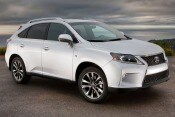
Select a Make Select a Model ADVERTISEMENT More on Edmunds 2013 New Car Buying Guides2013 New Car Buying GuidesCompare Popular VehiclesCompare Popular VehiclesNew Car RatingsNew Car Ratings2014 Lexus RX 350Vote Now: Best Cars for Getting to (and Away From) Holiday GatheringsWhat's HotWhat's Hot PAGESETUP.addControl(function() { var h = document.getElementsByTagName('head')[0]; var s = document.createElement('script'); s.type = 'text/javascript'; s.src = 'https://apis.google.com/js/plusone.js'; h.appendChild(s); }, 'low');

Monday, April 29, 2013

House sales strengthens market

An estate agent's display09/04/13

By Daniel Machi

March provided some good news for the housing market, with sales lifting to a three-year high and prices experiencing a "marked" turnaround.

Chartered surveyors each sold an average of around 17 homes during the three months to March - the highest number recorded since March 2010.

In addition, research from the Royal Institution of Chartered Surveyors (RICS) revealed that 21 per cent of surveyors reported an increase in house prices, which is the highest proportion recorded since June 2010.

A balance of one per cent more surveyors still reported house prices falling rather than rising, but this is significantly down on the seven per cent net balance reporting falls the previous month.

Demand from would-be buyers intensified in March, with a balance of 11 per cent more surveyors reporting increases in new buyer enquiries rather than falls, marking the highest share in five months.

The figures suggest confidence is slowly returning to the market - a welcome and much needed boost for buyers and sellers alike.

Lenders and estate agents have been reporting signs of a tentative housing market recovery ever since the launch of the Government's Funding for Lending scheme last August.

It has prompted an increase in mortgage availability and is seeing lenders continue to slash their rates as they borrow more money at lower rates.

Peter Bolton King, RICS global residential director, claimed such initiatives are gently easing the pressure on the market and freeing up stagnant chains.

"A buoyant, healthy property market is central to economic recovery and, while these are still very much early signs, it is encouraging that sales are beginning to pick-up," he said.

"The increase in potential buyers getting out there and viewing property is particularly encouraging."

Potential homebuyers with smaller deposits are also to receive extra help from the Government after it recently announced the Help to Buy Scheme, which will give a helping hand to people with deposits of just five per cent.

This initiative will be available for purchase of any home old or new and not just for first time buyers, so it is hoped it will help lenders provide more mortgages to more people.

Mortgage availability is generally increasing and surveyors are optimistic that the sales rebound is set to continue in the coming months, with a balance of 19 per cent more expecting transactions to jump over the next three months rather than fall.

They are also upbeat about prices rising, although this will be achieved over the course of the next 12 months rather than the shorter-term.

RICS said that London continues to be the "standout performer" in terms of house price gains, with the south east also witnessing modest increases.

Meanwhile, Northern Ireland reported price increases rather than decreases for the first time since July 2007.

Wales, the South West and the Midlands all recorded flat or slightly negative price balances, while Scotland has seen less severe price falls so far this year compared to 2012.

Surveyors in the West Midlands have seen the biggest increases in homes sold since the start of the year, followed by those in London.

At the other end of the scale, sales increases in East Anglia and the East Midlands were found to be the flattest.


This post was made using the Auto Blogging Software from WebMagnates.org This line will not appear when posts are made after activating the software to full version.

Monday, April 22, 2013

Huge rise for house sales in UK

Suburban houses from above12/03/13

By Olivia Morley

UK house sales reached their highest level in more than two and-a-half years last month as confidence continued to return to the market, surveyors said on Tuesday.

The sales jump helped to send expectations that house prices are set to increase in the next year, soaring to a three-year high, the Royal Institution of Chartered Surveyors (RICS) found.

Surveyors sold an average of just under 17 homes in the three months to February, marking the highest volume of sales recorded since June 2010.

The sales uplift is predicted to continue into spring, with a balance of 8% more surveyors expecting transactions to increase rather than fall back over the next three months.

Prices remained broadly flat, with 6% more surveyors saying that prices had dipped rather than increased, continuing a trend seen since last autumn.

However, in the longer term, there is a "growing suspicion" that house prices are set to edge upwards, RICS reported.

Surveyors' expectations for house prices in the next 12 months increased to the highest level since they started being monitored in February 2010.

The number of mortgages on the market has increased by around a third since the Government launched a Funding for Lending scheme last August to unblock the housing market.

Lenders have also been slashing their rates to some of their lowest-ever levels following the introduction of the initiative, which gives lenders access to cheap finance.

RICS said its latest findings showed that the scheme may be "slowly encouraging would-be buyers to test the market" as demand remained steady across the country.

A balance of 1% more surveyors reported rises in the number of homes coming onto the market, although the number of properties available for sale remains at "historically low levels", the study said.

Peter Bolton King, RICS global residential director, said: "It's encouraging to see that the housing market now appears to be picking up across most parts of the UK despite ongoing concerns about the health of the economy.

"This may, in part, be down to the growing availability of mortgage finance through schemes such as Funding for Lending.

"However, even with activity running at its best level since the middle of 2010, it is still well down on its pre-crisis norm."


This post was made using the Auto Blogging Software from WebMagnates.org This line will not appear when posts are made after activating the software to full version.

Thursday, April 18, 2013

Petrol sales drop by price

Fuel station at night05/04/13

By James O'Brien

AA has saved gasoline sales decreased significantly since the beginning of the credit crisis and the pump price increase in motorists switching to a more fuel-efficient vehicles.

The figures issued by the Department of energy and climate change shows the 22.87 million litres of petrol were sold in 2007, compared with 17.42 million years. The number of sales in the year, was 18.27 million liters 2554 (2011)

On the other hand, Diesel sales go up during that time from 14.80 million liters to 16.73 million liters. There is a slight increase in year-on-year to 16.24 million liters of diesel fuel sold for two years ago.

Government figures highlighted the overall emissions in the five-year period, taking into consideration both the petrol and diesel. Fuel stations in the United Kingdom selling 37.67 million liters of fuel compared with 34.16 million liters a year, 2007.

The difference in sales between 2007 and 2012 fuel equivalent to 35 days of sales lost value, according to the AA.

Not surprised by the drop. Edmund King, the AA President, factors contributing to loss of business on forecourts across the country.

"Make it easier for more than diesel vehicles and petrol vehicles have a small part of this overall decline in the UK fuel sales in the long run. He said that the

"The higher prices, however, the pump has to call Yai recently-sold petrol price surge between March and October 10, p-a-l. Sales of petrol stations fell by five per cent. "

Fears that the global economic recovery, Mr. King. The stock exchange of Thailand will be considered greater than demand for fuel. And ramp up the items, according to the

"Control of fuel consumption and retail sales have been precarious pressure what happens when speculators pump yourself up with a bullish sentiment and send prices higher, he added.


This post was made using the Auto Blogging Software from WebMagnates.org This line will not appear when posts are made after activating the software to full version.

Saturday, April 6, 2013

Online sales tax payment approval:


The U.S. Senate, Friday, approved a budget amendment sponsored by Sen. Lamar Alexander (R-Tenn.). Senator Alexander’s amendment allows states to collect sales taxes on purchases made from Internet-based retailers even if the retailer has no physical presence in that state.
Current Practice
Currently, online retailers have to collect sales taxes on purchases made by consumers who live in states where those retailers have a physical presence. In most states, consumers have to pay tax on purchases made online even if the retailer doesn’t collect it at the time of purchase. This is known as use tax and the rules for this tax vary by state.

A Non-binding Amendment
The budget amendment, passed by the Senate, was based on the Marketplace Fairness Act. The purpose of both the amendment and the act is to make the collecting of sales tax consistent nationwide.

The Senate measure, a largely ceremonial amendment to a largely ceremonial budget, passed by a vote of 75-24. Why is it largely ceremonial? Because the Senate budget has virtually no chance of adoption thanks to the ongoing rancor between the Senate and the House about – well, everything.

As Reuters reports, "Still, the approval should reassure states and 'bricks and mortar' retailers that Congress will come together to pass a bill soon."

The Amazon Tax
The Marketplace Fairness Act was first introduced in the Senate in 2011, and reintroduced in February. Also known as the “Amazon (Nasdaq:AMZN) tax,” the legislation is designed to force online retailers like Amazon to collect sales tax on virtually all online sales.

Proponents and Opponents
Proponents and opponents alike have been vocal on the subject. Supporters of the measure include bricks-and-mortar retailers like Wal-Mart (NYSE:WMT), Best Buy (NYSE:BBY), Target (NYSE:TGT), and Dollar General (NYSE:DG).

Opponents, not surprisingly, include online companies such as eBay (Nasdaq:EBAY), Facebook (Nasdaq:FB), and Oracle (Nasdaq:ORCL). Joining the opposition side are several anti-tax groups including Americans for Tax Reform and Campaign for Liberty.

Brian Bieron, Senior Director of Global Public Policy at eBay, said, “Small business retailers who use the Internet should be protected from any new grant of power to far-away state government tax collectors so that they cannot be threatened or sued by states that are thousands of miles away and have no connection to the local communities where those small businesses create jobs and opportunity. Any Internet sales tax legislation, amendment or other legislative vehicle should include clear, direct and meaningful protection for all small businesses that are using the Internet.”

The anti-tax groups maintain that passage of the Marketplace Fairness Act would, first, constitute a new type of taxation and, secondly, allow states to reach across their borders to force retailers to comply with their tax laws.
Proponents believe the law would level the playing field, forcing all retailers to play by the same rules. The measure, as currently written, includes an exception for smaller online retailers with gross annual sales of under $1 million.

A Surprising Supporter
One of the more surprising supporters of the law to emerge is Amazon. Many find it curious that the world’s largest online retailer supports the notion that Internet sellers should be required to collect sales taxes – even in states where they don’t have a physical presence.

With Amazon expanding its physical presence into more states and the fact that it would be required to collect taxes in those jurisdictions, the company’s position isn’t so unusual.

From Amazon’s perspective, passage of the law would force competitors with smaller geographic footprints to collect sales taxes everywhere. In other words, as the company expands, Amazon is viewing itself more as a brick and mortar business.

The National Retail Federation, another supporter of the law, sees Amazon’s position as a good thing. It estimates that state and local governments lose as much as $24 billion a year in taxes from all non-taxed Internet purchases.

Taxes Are Inevitable
Because of the recent attention and the overwhelming Senate vote, many experts and analysts, including Forbes’ Robert W. Wood, believe we are moving closer to a day when sales tax will be collected on all online purchases nationwide.

Eventually, the Supreme Court could rule. If that happens, Wood suspects the high court might reinterpret the term “physical presence” effectively mandating universal collection.

Take Action
It seems inevitable that, at some point in the not so distant future, what is now called a usage tax will transform from a combination of patchwork enforcement and relying on people’s honesty to the levying of a sales tax for all online purchases.

Like most things in Washington, chatter comes and chatter goes. If we’re at the beginning of one of those cycles where the internet sales tax again makes headlines, trading opportunities in brick and mortar retailers like Target, Best Buy, and Wal-Mart, as well as online sellers like Amazon, eBay, might present themselves.
If nationwide legislation is passed, that will alter the online retail business model and, at least for the short term, the fundamentals of the stock.

Online sales tax payment approval:


The U.S. Senate, Friday, approved a budget amendment sponsored by Sen. Lamar Alexander (R-Tenn.). Senator Alexander’s amendment allows states to collect sales taxes on purchases made from Internet-based retailers even if the retailer has no physical presence in that state.
Current Practice
Currently, online retailers have to collect sales taxes on purchases made by consumers who live in states where those retailers have a physical presence. In most states, consumers have to pay tax on purchases made online even if the retailer doesn’t collect it at the time of purchase. This is known as use tax and the rules for this tax vary by state.

A Non-binding Amendment
The budget amendment, passed by the Senate, was based on the Marketplace Fairness Act. The purpose of both the amendment and the act is to make the collecting of sales tax consistent nationwide.

The Senate measure, a largely ceremonial amendment to a largely ceremonial budget, passed by a vote of 75-24. Why is it largely ceremonial? Because the Senate budget has virtually no chance of adoption thanks to the ongoing rancor between the Senate and the House about – well, everything.

As Reuters reports, "Still, the approval should reassure states and 'bricks and mortar' retailers that Congress will come together to pass a bill soon."

The Amazon Tax
The Marketplace Fairness Act was first introduced in the Senate in 2011, and reintroduced in February. Also known as the “Amazon (Nasdaq:AMZN) tax,” the legislation is designed to force online retailers like Amazon to collect sales tax on virtually all online sales.

Proponents and Opponents
Proponents and opponents alike have been vocal on the subject. Supporters of the measure include bricks-and-mortar retailers like Wal-Mart (NYSE:WMT), Best Buy (NYSE:BBY), Target (NYSE:TGT), and Dollar General (NYSE:DG).

Opponents, not surprisingly, include online companies such as eBay (Nasdaq:EBAY), Facebook (Nasdaq:FB), and Oracle (Nasdaq:ORCL). Joining the opposition side are several anti-tax groups including Americans for Tax Reform and Campaign for Liberty.

Brian Bieron, Senior Director of Global Public Policy at eBay, said, “Small business retailers who use the Internet should be protected from any new grant of power to far-away state government tax collectors so that they cannot be threatened or sued by states that are thousands of miles away and have no connection to the local communities where those small businesses create jobs and opportunity. Any Internet sales tax legislation, amendment or other legislative vehicle should include clear, direct and meaningful protection for all small businesses that are using the Internet.”

The anti-tax groups maintain that passage of the Marketplace Fairness Act would, first, constitute a new type of taxation and, secondly, allow states to reach across their borders to force retailers to comply with their tax laws.
Proponents believe the law would level the playing field, forcing all retailers to play by the same rules. The measure, as currently written, includes an exception for smaller online retailers with gross annual sales of under $1 million.

A Surprising Supporter
One of the more surprising supporters of the law to emerge is Amazon. Many find it curious that the world’s largest online retailer supports the notion that Internet sellers should be required to collect sales taxes – even in states where they don’t have a physical presence.

With Amazon expanding its physical presence into more states and the fact that it would be required to collect taxes in those jurisdictions, the company’s position isn’t so unusual.

From Amazon’s perspective, passage of the law would force competitors with smaller geographic footprints to collect sales taxes everywhere. In other words, as the company expands, Amazon is viewing itself more as a brick and mortar business.

The National Retail Federation, another supporter of the law, sees Amazon’s position as a good thing. It estimates that state and local governments lose as much as $24 billion a year in taxes from all non-taxed Internet purchases.

Taxes Are Inevitable
Because of the recent attention and the overwhelming Senate vote, many experts and analysts, including Forbes’ Robert W. Wood, believe we are moving closer to a day when sales tax will be collected on all online purchases nationwide.

Eventually, the Supreme Court could rule. If that happens, Wood suspects the high court might reinterpret the term “physical presence” effectively mandating universal collection.

Take Action
It seems inevitable that, at some point in the not so distant future, what is now called a usage tax will transform from a combination of patchwork enforcement and relying on people’s honesty to the levying of a sales tax for all online purchases.

Like most things in Washington, chatter comes and chatter goes. If we’re at the beginning of one of those cycles where the internet sales tax again makes headlines, trading opportunities in brick and mortar retailers like Target, Best Buy, and Wal-Mart, as well as online sellers like Amazon, eBay, might present themselves.
If nationwide legislation is passed, that will alter the online retail business model and, at least for the short term, the fundamentals of the stock.

Online sales tax payment approval:


The U.S. Senate, Friday, approved a budget amendment sponsored by Sen. Lamar Alexander (R-Tenn.). Senator Alexander’s amendment allows states to collect sales taxes on purchases made from Internet-based retailers even if the retailer has no physical presence in that state.
Current Practice
Currently, online retailers have to collect sales taxes on purchases made by consumers who live in states where those retailers have a physical presence. In most states, consumers have to pay tax on purchases made online even if the retailer doesn’t collect it at the time of purchase. This is known as use tax and the rules for this tax vary by state.

A Non-binding Amendment
The budget amendment, passed by the Senate, was based on the Marketplace Fairness Act. The purpose of both the amendment and the act is to make the collecting of sales tax consistent nationwide.

The Senate measure, a largely ceremonial amendment to a largely ceremonial budget, passed by a vote of 75-24. Why is it largely ceremonial? Because the Senate budget has virtually no chance of adoption thanks to the ongoing rancor between the Senate and the House about – well, everything.

As Reuters reports, "Still, the approval should reassure states and 'bricks and mortar' retailers that Congress will come together to pass a bill soon."

The Amazon Tax
The Marketplace Fairness Act was first introduced in the Senate in 2011, and reintroduced in February. Also known as the “Amazon (Nasdaq:AMZN) tax,” the legislation is designed to force online retailers like Amazon to collect sales tax on virtually all online sales.

Proponents and Opponents
Proponents and opponents alike have been vocal on the subject. Supporters of the measure include bricks-and-mortar retailers like Wal-Mart (NYSE:WMT), Best Buy (NYSE:BBY), Target (NYSE:TGT), and Dollar General (NYSE:DG).

Opponents, not surprisingly, include online companies such as eBay (Nasdaq:EBAY), Facebook (Nasdaq:FB), and Oracle (Nasdaq:ORCL). Joining the opposition side are several anti-tax groups including Americans for Tax Reform and Campaign for Liberty.

Brian Bieron, Senior Director of Global Public Policy at eBay, said, “Small business retailers who use the Internet should be protected from any new grant of power to far-away state government tax collectors so that they cannot be threatened or sued by states that are thousands of miles away and have no connection to the local communities where those small businesses create jobs and opportunity. Any Internet sales tax legislation, amendment or other legislative vehicle should include clear, direct and meaningful protection for all small businesses that are using the Internet.”

The anti-tax groups maintain that passage of the Marketplace Fairness Act would, first, constitute a new type of taxation and, secondly, allow states to reach across their borders to force retailers to comply with their tax laws.
Proponents believe the law would level the playing field, forcing all retailers to play by the same rules. The measure, as currently written, includes an exception for smaller online retailers with gross annual sales of under $1 million.

A Surprising Supporter
One of the more surprising supporters of the law to emerge is Amazon. Many find it curious that the world’s largest online retailer supports the notion that Internet sellers should be required to collect sales taxes – even in states where they don’t have a physical presence.

With Amazon expanding its physical presence into more states and the fact that it would be required to collect taxes in those jurisdictions, the company’s position isn’t so unusual.

From Amazon’s perspective, passage of the law would force competitors with smaller geographic footprints to collect sales taxes everywhere. In other words, as the company expands, Amazon is viewing itself more as a brick and mortar business.

The National Retail Federation, another supporter of the law, sees Amazon’s position as a good thing. It estimates that state and local governments lose as much as $24 billion a year in taxes from all non-taxed Internet purchases.

Taxes Are Inevitable
Because of the recent attention and the overwhelming Senate vote, many experts and analysts, including Forbes’ Robert W. Wood, believe we are moving closer to a day when sales tax will be collected on all online purchases nationwide.

Eventually, the Supreme Court could rule. If that happens, Wood suspects the high court might reinterpret the term “physical presence” effectively mandating universal collection.

Take Action
It seems inevitable that, at some point in the not so distant future, what is now called a usage tax will transform from a combination of patchwork enforcement and relying on people’s honesty to the levying of a sales tax for all online purchases.

Like most things in Washington, chatter comes and chatter goes. If we’re at the beginning of one of those cycles where the internet sales tax again makes headlines, trading opportunities in brick and mortar retailers like Target, Best Buy, and Wal-Mart, as well as online sellers like Amazon, eBay, might present themselves.
If nationwide legislation is passed, that will alter the online retail business model and, at least for the short term, the fundamentals of the stock.

Wednesday, January 16, 2013

Time and Sales or Tape

AppId is over the quota
Definition:

Time and sales (also known as the tape) is information that is used by professional day traders to watch the current price movements at its most detailed level. Time and sales shows each individual trade as it occurs, and is usually displayed as a scrolling list. Time and sales can be used as part of a larger trading system (such as a confirmation for an indicator trade), or on its own (as with scalping). Time and sales provides several pieces of valuable information about each trade, and the market as a whole.

The time and sales shows the exact price that each trade occurs at, and also whether the trade occured at the bid (market selling price) or ask (market buying price). This information shows whether there are currently more buyers or sellers, and also what prices they are buying and selling at.

The time and sales also shows the amount of volume that each trade includes (the number of contracts or shares that were traded). This shows whether there are more contracts (or shares) being bought or sold, and at which prices the largest amounts of volume are trading.

By watching the time and sales, a trader can determine exactly where the current support and resistance levels are on an extremely detailed level. Support is shown by the time and sales having difficulty trading below a particular price, and resistance is shown by the time and sales having difficulty trading above a particular price.

Understanding the time and sales is a relatively simple concept, but it takes a lot of experience to be able to trade using the time and sales. Depending upon the market and the time of day, the time and sales can move very quickly, and keeping track of everything can become quite difficult. The more time that is spent watching the time and sales, the more useful the time and sales will become.


View the original article here

Wednesday, December 19, 2012

Samsung Ends Bid for European Sales Ban on Apple Products

AppId is over the quota
Samsung, the South Korean electronics giant, had been seeking injunctions in several countries, including Britain, France, Germany, Italy and the Netherlands, contending that Apple, Samsung’s biggest rival in the smartphone market, had infringed Samsung patents.

The move came only a day after a ruling in a related case in San Francisco, where a Federal District Court judge rejected a request by Apple, which is based in California, for an injunction to block sales of certain Samsung devices. The decision followed a previous jury ruling that Samsung had violated Apple patents.

After the latest twist in the European case, Samsung said it had acted “in the interest of protecting consumer choice.” Analysts said other factors might have been in play, including a possible nudge from the European Commission.

In January, the commission opened a formal antitrust investigation into Samsung’s licensing terms for patents covering wireless technologies. Under a previous agreement, Samsung had pledged to make the patents available to competitors on “fair, reasonable and nondiscriminatory” terms.

“The scope of what was withdrawn precisely matches the area in which the European Commission has been investigating,” said Florian Müller, a patent consultant in Germering, Germany. “It’s not just that the plot is thickening; in my view, there can be no other plausible view than that there is pressure from Brussels.”

The commission previously said that it was concerned about possible abuse of patents like the ones at issue in the Apple-Samsung injunction request, which cover technologies needed for a device to function. Without some of these “standard essential patents” from Samsung, for example, phones cannot connect to high-speed wireless networks.

“Regulators have been saying, if the patent holders try to abuse these patents, then they are going to get in trouble,” Mr. Müller said.

The commission declined to comment directly on whether there might be a link between Samsung’s announcement on Tuesday and the antitrust case in Brussels. “We take note of this development,” said Antoine Colombani, the spokesman for the European competition commissioner, Joaqu?n Almunia. “Our investigation is ongoing.”

Samsung said that it could not comment on the proceedings but that it was “fully cooperating with the European Commission.”

“Samsung remains committed to licensing our technologies on fair, reasonable and nondiscriminatory terms, and we strongly believe it is better when companies compete fairly in the marketplace, rather than in court,” it said in a statement.

There has been speculation that Samsung and Apple have been in talks to reach a settlement, though the broad scale of the litigation between the two companies, with lawsuits seeking sales bans or damages continuing on several continents, could make that challenging.

“We cannot comment on details of ongoing legal proceedings, but we believe a commercial resolution is achievable,” Samsung said in a statement.

Alan Hely, a spokesman for Apple, declined to comment.

The announcement by Samsung did not end litigation between the two companies in Europe. Samsung said it planned to pursue lawsuits seeking damages from Apple for what it contends is patent infringement.

Apple and Samsung have also been battling over other patents, covering nonessential features of their devices, like design.

Apple, too, has previously secured bans on the sale of certain Samsung products. Last year, for example, a court in Düsseldorf ruled that Samsung could not sell one of its Galaxy tablet devices in Germany because it bore too close a resemblance to the iPad 2 from Apple.

While some analysts cited regulatory pressure as a possible reason for Samsung’s decision on Tuesday, others said the company might have decided that the lawsuits were simply a distraction. Samsung’s phones, especially its Galaxy S3, have been selling well.

In the third quarter, the S3 surpassed the iPhone 4S to become the world’s best-selling smartphone, according to Strategy Analytics, a research firm.

“Maybe the market was telling them that they were succeeding and their time was better spent promoting sales of their product,” said Charles Golvin, an analyst at Forrester Research.

James Kanter contributed reporting.


View the original article here

Sunday, July 29, 2012

Ariix-$23 million sales in the first year


According to sources close to the Ariix management the company has millions in the period July 2011 - July 2012 about $23 and is up to $2 million per week do sales until autumn 2012.
Ariix is a startup and 2011 by Fred Cooper - CEO, Jeffrey Yates, Mark Wilson and Riley timmer was founded. MLM guru Tim Sales came in July 2011.
Much of the research for ARIIX is in the House by the company products own scientists, however, ARIIX also rely on top-class research universities around the world support the findings and information about the latest breakthroughs in nutritional science.
Ariix is open in 9 countries, including mainland China


Saturday, June 9, 2012

China May car sales up 22.6 percent year-on-year: official data

AppId is over the quota
By Fang Yan and Ken Wills

BEIJING | Sat Jun 9, 2012 5:25am EDT

BEIJING (Reuters) - Car sales in China rose 22.6 percent in May from a year earlier, according to data released on Saturday, extending the double-digit gain made in the previous month, as new models premiered at April's Beijing autoshow started to hit the showrooms.

In May a total of 1.28 million sedans, sport utility vehicles (SUVs), multi-purpose vehicles (MPVs) and minivans were sold in the country, the China Association of Automobile Manufacturers (CAAM) said. In the same month of 2011, that number was 1.04 million.

From January to May, deliveries climbed 5.5 percent to 6.33 million, continuing an uptrend which started in April.

The strong rebound by Toyota Motor (7203.T) and Honda Motor (7267.T), which both suffered severe shortages of parts a year ago after northern Japan's devastating earthquake and tsunami in March 2011, also pushed up the monthly tally.

Demand is likely to remain solid if Beijing renews some of its policy incentives which helped propel China beyond the U.S. as the world's largest car market by volume in 2009, industry observers say.

"The incentives will help bolster demand for minivans, and cheap cars like (the) QQ, which are popular in lower-tier cities and rural areas," said John Zeng, Asia Pacific director at industry consultancy LMC Automotive. "If such policy incentives do come out as expected, sales in the second half would definitely be better than the first half."

A source told Reuters late last month that Beijing would soon resume paying subsidies to rural residents who trade in old vehicles for new, fuel efficient ones to rekindle automobile demand amid a market slowdown.

Beijing introduced a series of stimuli in 2009, including tax incentives for small cars, but China's auto market slowed significantly in 2011 after the policies expired, with annual car sales climbing 5.2 percent, down from a 33 percent and 53 percent annual gains in 2010 and 2009 respectively.

In the United States, automakers posted strong May sales gains from a year ago, but the sales rate still fell short of expectations as the broader economy softened.

Toyota and Honda saw their China car sales jumped 105 percent and 92 percent respectively.

General Motors (GM.N) maintained its leading position in China helped in part by a rebound in minivan sales, which contributed to about 55 percent of its monthly tally.

SAIC Motor Corp (600104.SS), a longtime partner of GM and Volkswagen AG (VOWG.DE), was the big domestic winner with a year-on-year growth rate of 20.9 percent in May.

(Reporting by Fang Yan and Ken Wills; Editing by Daniel Magnowski)


View the original article here

Saturday, October 22, 2011

Travel Websites - How to Increase Your Traffic & Sales Guaranteed


Web sites are a major part of the tourism marketing success strategy used by international tourism promoters in the new millennium: tourism boards, Associations, lodging, tour operators, etc.
Big Fat Warning
If your travel web site does not have these four primary elements clearly and quickly represented, you are missing opportunities, losing sales and may not survive in the tourism industry.
1. Creates a desire to use your tourism services, visit your destination or participate in your unique tourism option
2. Clearly informs prospects of travel and service benefits, options, sites, nature/environment, activities
3. Answer questions and concerns a typical visitor may have
4. Motivates prospects to contact you quickly (not your competitor) for more information, travel options and dates, answer questions and address concerns
If your site achieves all these goals, then the prospects that have visited your site will be more excited, motivated, qualified, informed and much closer to giving you a booking or visiting your country.
What percentage of your total website visitors are converting into solid prospects and sale?
Probably not as much as you would like.
This article is not about web design and layout theory, but why the written word and consumer psychology is a prime factor in influencing arrivals and sales from your travel website.
Create a desire to Visit your destination or travel with your company
Prospective travelers may or may not choose to visit your destination based on what they read on your web site - usually just your home page. Read the article Tourist Safety and Security on Adventure Business Consultants, then you'll know how crucial it is to first communicate to prospective travelers that your destination and/or tour is a safe, secure and fun place to visit. With so many global destination choices online and so much international turmoil, you MUST communicate clearly it is a safe and fun destination quickly.
The best place to first communicate safety, security and fun is on your home page, not buried deep in your site. When someone first comes to your web site, you literally have five to twenty seconds to grab their interest and compel them to want to know more about your destination, tours, etc. If you don't grab them on your home page, they are gone. Those prospective tourists are back to surfing the web, seeking out a more interesting, compelling tourism web site and vacation destination.
If you look at your log report, (the statistical report that your internet service provider should make accessible to you) that monitors your web visitors activity, i.e. pages visited, length of time on your site, key words used to find your site, etc., you may notice that the majority of visitors may stay less then a minute. On a poorly written and designed web site, maybe less then fifteen seconds. So grabbing their attention and motivating them to want to know more is the first obstacle and opportunity. Testimonials and photos of happy tourist are perfect for communicating safety and experience quickly. Use them liberally.
Tourism Web Site Must Clearly inform
One of the prime reasons people travel is to experience "something different" from their ordinary life and location. Active and ecotourists want to learn about new cultures, see different houses, hear and speak a different language, reflect on ancient religions and buildings, marvel at unbroken vistas, or try a new activity. This is exactly what most ecotourism operator and destinations are selling and what you must communicate to your web visitors.
Too many web sites that give web visitors unknown destinations instead of activities or types of regions. Most people surfing your web site are not going to know, for example, what they'll find in Hosgol, Khenti, or the Gobi - which are major regions of Mongolia I discovered during two consulting projects I did there for their tourism Association and ministry. You be better off to define what type of regions they are and what they have to offer. Use descriptive words that everyone will understand. For example:
Hosgol -
o Mountains
o Lakes
o Fishing
o Horseback Riding
o Hiking
Khenti -
o Steppes
o Rivers
o Fishing
o Horseback & Mt. Biking
o Religious Sites
Gobi -
o Desert
o Camel Riding
o Trekking
o Archeology
You must use descriptive text and compelling words that paint a desirable mental picture.
Summarize your trips in bullets and short headlines and sub- headlines
Use descriptive verbs and compelling words in the body of the text to give substance and details to the headlines and sub-heads.
Effective Tourism Marketing Web Sites -Answer Questions and Concerns
When a prospective tourist is considering a destination, in addition to types of regions and activities, they have additional questions and concerns that must be addressed to earn their visit or booking. The same holds true with Out Bound Booking Agents, but even more so.
Some of these travelers questions and concerns include:
Safety precautions and procedures o How you are going to protect their safety?
o Length of vacation
o Costs
o Difficulty of trip
o Travel options to Ulaan Bataar
o Lodging - hotel, camping or Ger
o Food- vegetarian or special restrictions
o Water - Is it safe?
o Medical emergency/1st aide resources
o Qualifications of staff
o Experience level of company
o Exchange rates & procedures
o Times of year to visit
o Group discounts
o Children - minimum age/experience
o Insurance needs/options
o Cancellation policy/minimums for departure
o In-country transportation & equipment
o Visa requirements
o Inoculations/disease precautions
o language
One of the best ways to deal with all the typical questions you'll get from prospective clients is a Frequently Asked Questions and Answers page - FAQ's. You should also create a pre-written response E-mail that responds to these questions and more. Testimonials and pictures that address these questions are great too.
Successful Tourism Marketing - Motivates prospects to Buy
Remember that: Marketing is the actions and steps to getting prospective and qualified visitors/clients to call or e-mail you.
Selling is the transference of enthusiasm from you to the prospect.
Sales is getting those prospective visitors/clients to feel comfortable and excited enough about your destination/or trip, to give your money and book a trip.
Your tourism web site quickly communicates that region and your tours:
Are fun, safe and secure on the home and subsequent pages
Effectively answer questions and concerns
Uses a blend of testimonials and images of happy visitors (especially celebrities and/or recognized media)
When prospects call or e-mail, they will far more motivated and excited. If you are excited in your spoken and written words too, then making a sale is ten times easier. If you or a staff member can effectively speak the foreign language of your prospect, can be excited about what you are selling and can ask for the booking, it would be better to schedule a phone call with serious prospects at your expense whenever possible. This will radically increase your odds of converting that web site visitor into a paying client.
Travel Web site Samples and Resources
See the following web sites for good use of testimonials, compelling headlines, layout, photos and descriptive text that clearly informs prospects of travel options, sites, nature, activities, etc. How a site looks is important, but it is the words and how they are expressed, that is most important.
Alaskadogsledding.com
california-river-rafting.com
How-to Create Tourism Web Sites that Sell - Guaranteed
Here is one of the best resources to help you define and communicate your most important information to prospective visitors and guests. This will motivate them to call, e-mail and give you a booking: Tourism Marketing Success
This special print or E-book will take you step by step through the process and helps you create effective and profitable Tourism marketing communications for brochures web sites, tradeshow booths, advertising, videos and more.
Tourism Web Site Check List for Success
Web sites are a major part of the marketing success strategy used by international tourism promoters.
Prospective travelers may or may not choose to visit your region or use your tour, based on what they read on your web site - usually just your home page.
Your web site quickly communicates that your destinations and tours are fun, safe and secure.
Your web site effectively answers questions and concerns.
The best place to first communicate safety, security and fun is on your home page, not buried deep in your site.
You must use descriptive text and compelling words that paint a desirable mental picture.
Summarize your trips in bullets and short headlines and sub-headlines
Use descriptive verbs and compelling words in the body of the text to give substance and details to the headlines and sub-heads.
One of the best ways to deal with all the typical questions you'll get from prospective clients is a Frequently Asked Questions and Answers page - FAQ's.
Don't forget that your web site must show up in the top 1 -20 positions of directories and search engines from a relevant key word search. Without this, no matter how well written and laid out your web site is, you will loose out on the majority of prospective clients. Listen to my podcast to learn more about search engine success and more E-marketing strategies for tourism professionals.
Tim Warren is the Host of Travel Business Success Online Radio Training Podcast Show, author of Tourism Marketing Success and founder of Travel Business Strategies. Since 1994, Tim has helped dozens of tourism businesses and destinations just like you with create trade show strategies that help you standout from the crowd, sell more trips and increase arrivals.